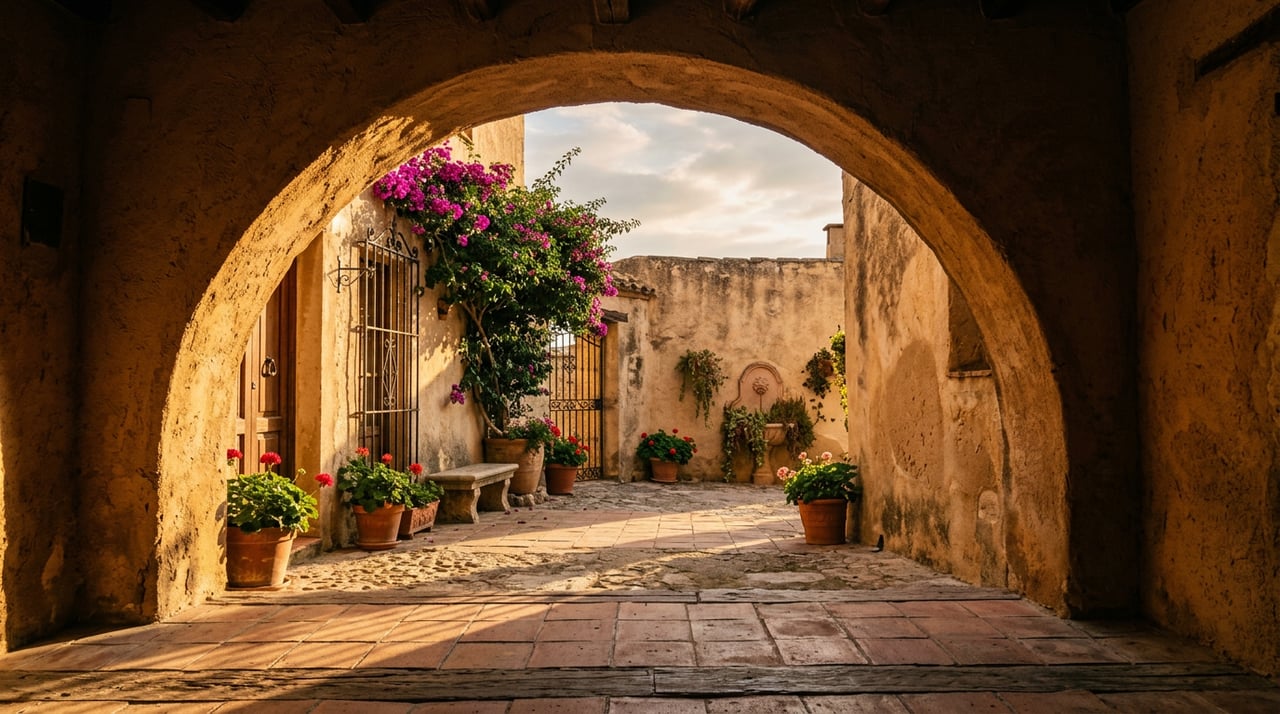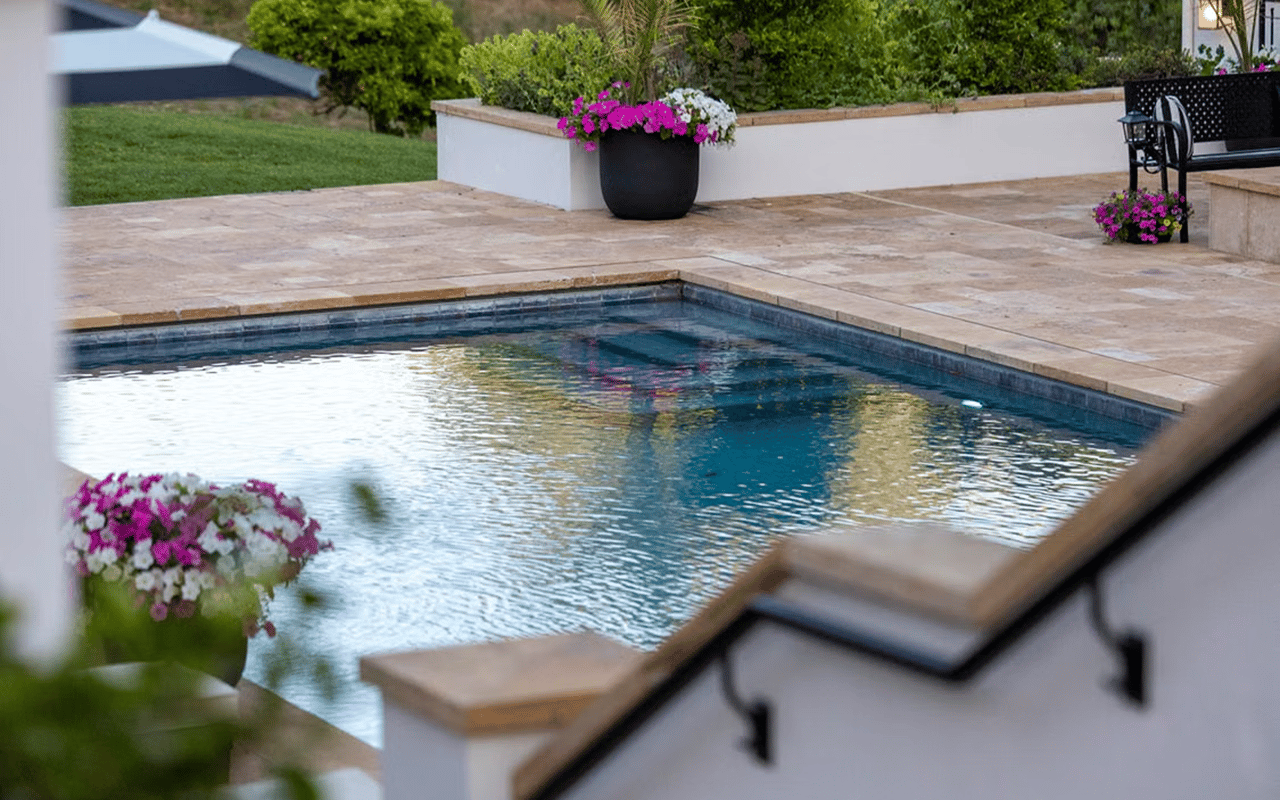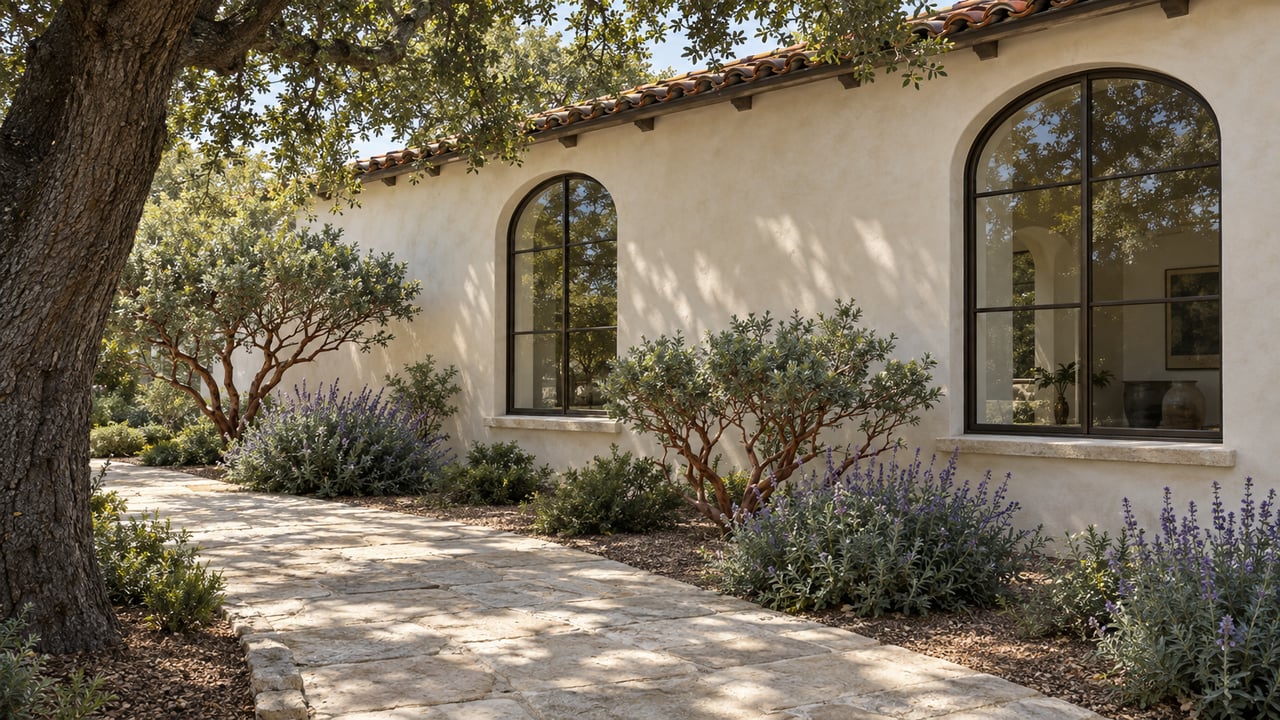
Rancho Santa Fe covers about 6.8 square miles split across two zip codes, 92067 and 92091. Inside that small footprint runs a boundary that never shows up in a listing photo, the edge of the historic Covenant. A house a quarter mile inside that line and a house a quarter mile outside it can carry a similar price, sit on similar acreage, and still answer to two different sets of rules for what an owner pays every year and what that payment actually includes.
Most people shopping in Rancho Santa Fe learn the median price first. What the median doesn't say is which side of the Covenant line a given home sits on, and that line decides more about the ongoing cost of owning the house than the sale price does.
Same Address, Two Different Rulebooks
The Covenant is the original planned community platted in 1928 around what is now the village's four-way stop. Properties inside it fall under the Rancho Santa Fe Protective Covenant, a set of architectural and land-use restrictions enforced by the Rancho Santa Fe Association and its Art Jury, the volunteer body that reviews everything from a new wing to a repainted gate.
Outside that boundary, but still carrying a Rancho Santa Fe mailing address, sit a string of gated communities built over the following decades. Fairbanks Ranch, The Bridges, Cielo, Del Mar Country Club, The Farms, Santaluz, and Whispering Palms all fall into this category. Each runs its own homeowners association with its own covenants, conditions, and restrictions, separate from the Association that governs the Covenant proper. A buyer comparing two listings under the same "Rancho Santa Fe, CA" heading may be comparing two communities that have never shared a governing document.
The Dues Formula Nobody Explains at the Open House
Inside the Covenant, the Rancho Santa Fe Association funds itself in a way that's unusual even by HOA standards. Rather than charging every property the same flat due, or basing it on lot size the way most California associations do, the Association assessed each property at 0.15 percent of its county-assessed value in fiscal 2026, the year that closed this past June, layered on top of the standard 1 percent property tax rate. Averaged across the roughly 2,044 properties that paid into the Association that year, that worked out to about $408 a month per household, funding a total operating budget near $33 million, a little under a third of which came from those dues.
The formula sounds neutral until Proposition 13 enters the picture. California resets a property's assessed value to its purchase price at the time of sale, then caps how much that assessed value can climb each year afterward. A family that bought their Covenant home decades ago is still paying dues pegged to a decades-old valuation. A buyer closing on the house next door this year gets assessed at this year's purchase price, and pays Association dues sized to match, for access to the same golf course, the same tennis club, and the same security patrol the longtime owner has used for years. Two neighbors, identical amenities, dues that can differ by hundreds of dollars a month based only on when each of them bought.
What the Golf Course Actually Costs
Golf access follows the same line. Rancho Santa Fe Golf Club restricts membership to owners of Covenant property by virtue of that ownership. There's no separate initiation fee to negotiate. It comes bundled with the Association dues already described.
Step outside the Covenant and the arrangement flips. Homeowners in the surrounding enclaves join separate private clubs, each with its own initiation fee. A 2025 rundown of North County golf clubs listed Santaluz's non-equity Clubhouse and Spa membership at a $32,000 initiation fee with $9,600 in annual dues and a $1,200 quarterly food and beverage minimum, and Del Mar Country Club's full golf membership at a $175,000 initiation fee with family dues near $2,490 a month. Club membership data aggregator privateIQ puts the average initiation fee across private clubs in the broader Rancho Santa Fe area near $170,000, roughly double the average across San Diego County as a whole.
| Club access | Setting | Initiation fee | Recurring cost |
|---|---|---|---|
| Rancho Santa Fe Golf Club | Inside the Covenant | Bundled into Association dues | Included in Association dues |
| Santaluz Clubhouse and Spa, non-equity | Gated enclave outside the Covenant | $32,000 | $9,600 a year plus $1,200 a quarter minimum |
| Del Mar Country Club, full golf | Gated enclave outside the Covenant | $175,000 | About $2,490 a month, family membership |
| Average private club, Rancho Santa Fe area | Countywide comparison | About $170,000 | Varies by club |
| Average private club, San Diego County | Countywide comparison | About $80,000 | Varies by club |
A home price alone won't tell a buyer which column they're in. Two houses at the same list price can hand a buyer club access that's already paid for, or a separate six-figure decision still ahead of them.
Why the Median Bounces Around So Much
The single median price quoted for Rancho Santa Fe moves harder than most coastal San Diego neighborhoods, and the Covenant line is part of the reason. Over the three months ending in May 2026, the median sale price sat near $3.9 million, down close to 22 percent from the same window a year earlier. In that same stretch, the median price per square foot rose about 37 percent, and homes that sold moved in about 20 days on market compared with 64 days the year before. Only 13 homes closed that May.
Those numbers don't describe one market cooling and heating at the same time. They describe a market small enough that its median shifts with whichever handful of homes happen to close in a given month, the same way a classroom's average height changes the moment one unusually tall student walks in. A month where more Covenant estates trade will post a higher median than a month where more compact homes in a non-Covenant enclave close, even if neither segment actually moved in price.
Other numbers point the same direction. By February 2026, the area's sale-to-list ratio had settled near 94 percent, and the share of active listings carrying a price reduction had climbed from about 12.5 percent to roughly 31 percent over the prior year, both signs that sellers were pricing to meet buyers rather than the reverse. Separate analysis covering the two zip codes through late 2025 described the $2 million to $3 million band as the fastest-moving tier with the strongest competition, with combined months of supply across 92067 and 92091 sitting close to six, on the edge between a balanced market and a buyer's market. A Covenant estate near $6 million and a smaller home in a non-Covenant enclave near $2.5 million aren't drawing from the same pool of buyers or moving on the same calendar, even though both show up under the same neighborhood name.
Reading a Listing Like a Local
Before treating any Rancho Santa Fe price as a benchmark, a few questions do more work than the median.
Does the parcel sit inside the Covenant boundary or inside one of the separately governed enclaves. That single fact determines whether golf and tennis access already come with the address or require a separate application and a six-figure initiation fee somewhere else.
What is the property's current assessed value, and what Association dues does it actually carry. Because dues track that specific parcel's purchase history rather than a neighborhood average, the figure on last year's listing sheet may not match what a new owner will pay once escrow closes.
How many comparable homes have actually closed recently, and in which tier. A median built on a dozen or so monthly sales spread across estates, mid-size Covenant homes, and enclave properties says less about any single house than a tight set of true comparables would.
A Few Questions Worth Asking Before You Tour
Is every Rancho Santa Fe address inside the Covenant? No. The historic Covenant is one part of the community. Fairbanks Ranch, The Bridges, Cielo, Del Mar Country Club, The Farms, Santaluz, and Whispering Palms carry Rancho Santa Fe addresses but operate under their own homeowners associations, separate from the Rancho Santa Fe Association.
Can a homeowner outside the Covenant join Rancho Santa Fe Golf Club? Membership is tied to property ownership inside the Covenant under the club's own policy. Homeowners in the surrounding enclaves typically join a separate private club serving their own community instead.
Are Association dues the same thing as property tax? No. The Association's dues are layered on top of the standard 1 percent property tax rate and calculated separately, at 0.15 percent of a property's assessed value, the rate set for fiscal 2026.
Comparing a Covenant estate against a home a few gates over in Fairbanks Ranch or Santaluz means comparing two different cost structures, not just two floor plans. The Daniels Group spends time on that comparison with clients before an offer goes in, so the dues, the club access, and the actual comparables behind a Rancho Santa Fe price are settled before escrow starts rather than during it.